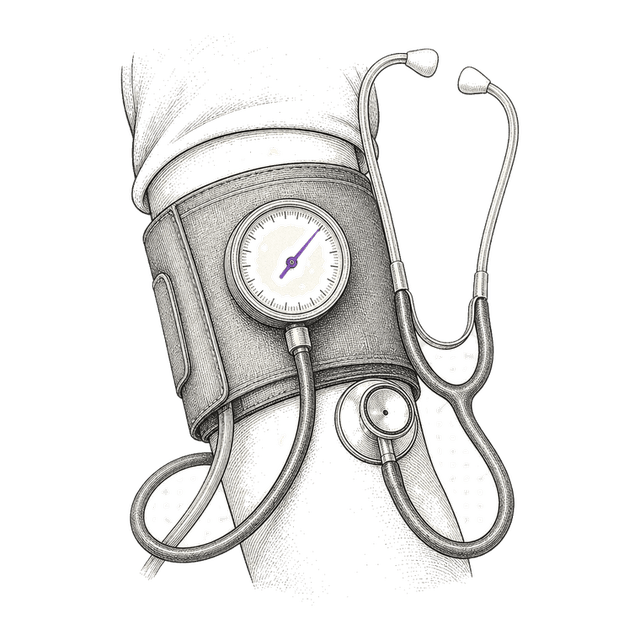
Read it right. Then decide.
Round one sorts blood pressure readings into the 2017 ACC/AHA bands, including the ones where the two numbers disagree and the higher band takes it. Round two is the part that matters at the chair: what you do with that reading, plus pulse, respirations, the technique that makes a number trustworthy, and the patients where the usual answer changes.
- ✓Two scored rounds. Sort the readings, then work the decisions. Both feed one score.
- ✓The higher number wins. 128/82 is Stage 1. 126/92 is Stage 2. 176/122 is a crisis on the bottom number alone. The drill drills exactly that.
- ✓It teaches before it tests. Every area opens with a short brief, Learn checks each drop as you make it, and a miss gives you the reason and a second look.
- ✓Feeds your dashboard. Your score rolls into your Clinical readiness.
Learn runs 8 readings and 8 decisions, Board 10 and 12, Exam 12 and 16, drawn fresh from a pool of 31 readings and 41 decision items, so no two runs are the same.
Every reading banded and every decision answered on the first look, with no hints taken. You read the number and you know what happens next, which is the whole job.
—
—
This drill is a study aid, not clinical guidance for treating real patients. Blood pressure categories follow the 2017 ACC/AHA guideline; when systolic and diastolic fall in different categories, the higher category applies. Defer-or-treat thresholds vary by office protocol, the supervising dentist, and the patient's medical history. The House of Hygiene is not affiliated with or endorsed by the JCNDE.